



What factors shape how young people are thinking about the future?
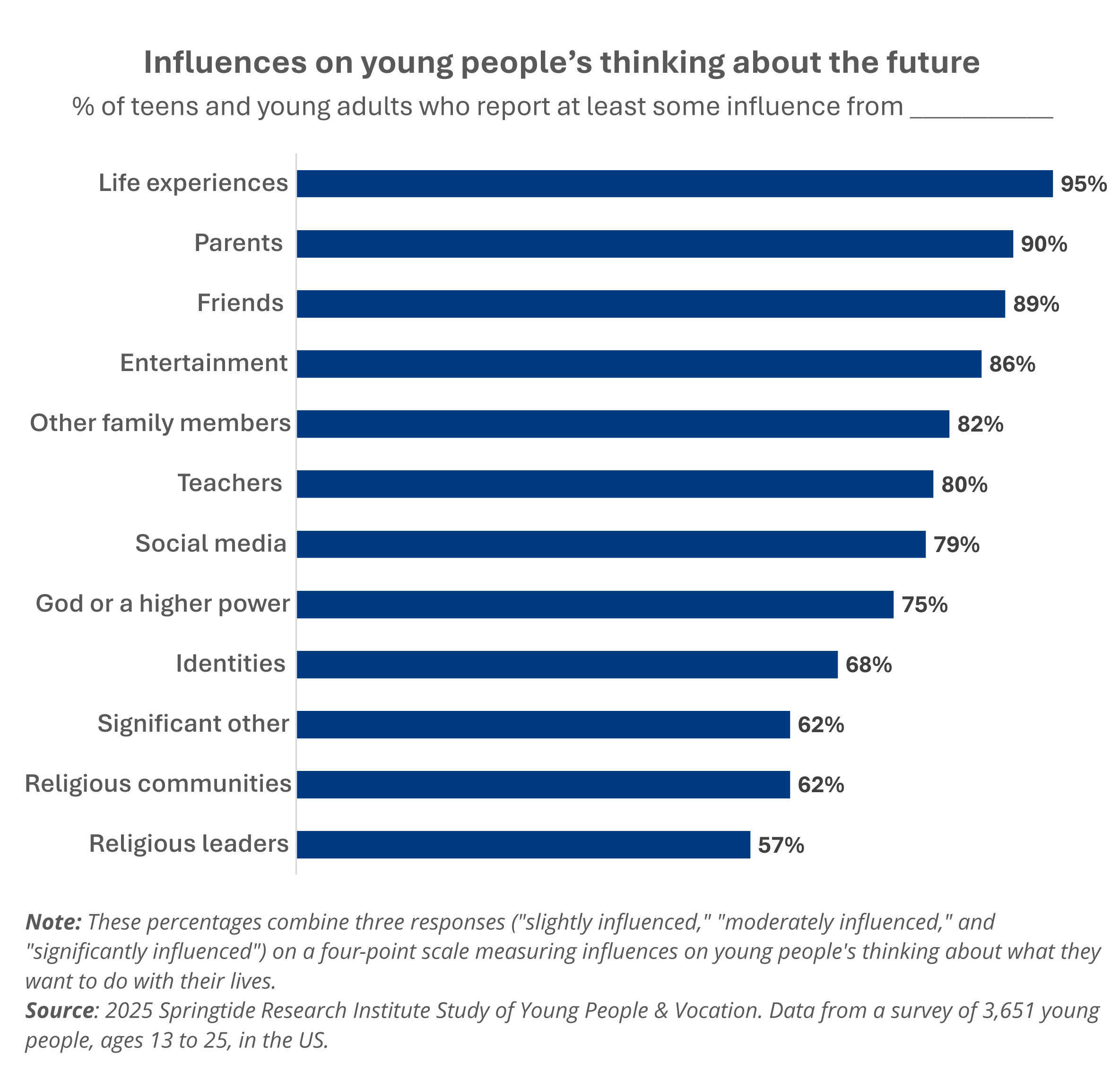
Although many factors shape young people’s thinking about the future, only some of these influences positively predict their certainty about their life’s purpose or whether thinking about the future feels helpful or harmful.
Predicting Certainty about One’s Purpose
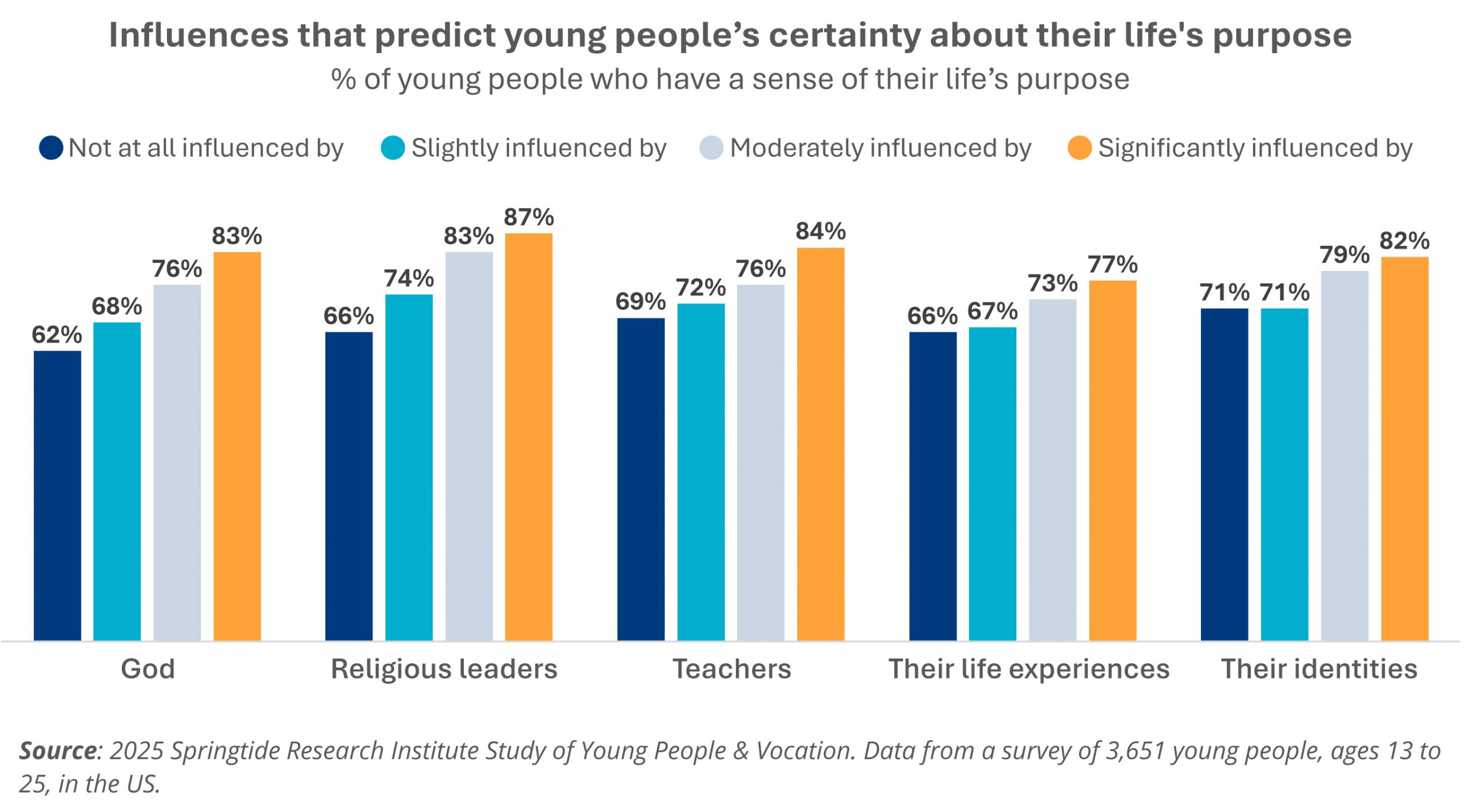
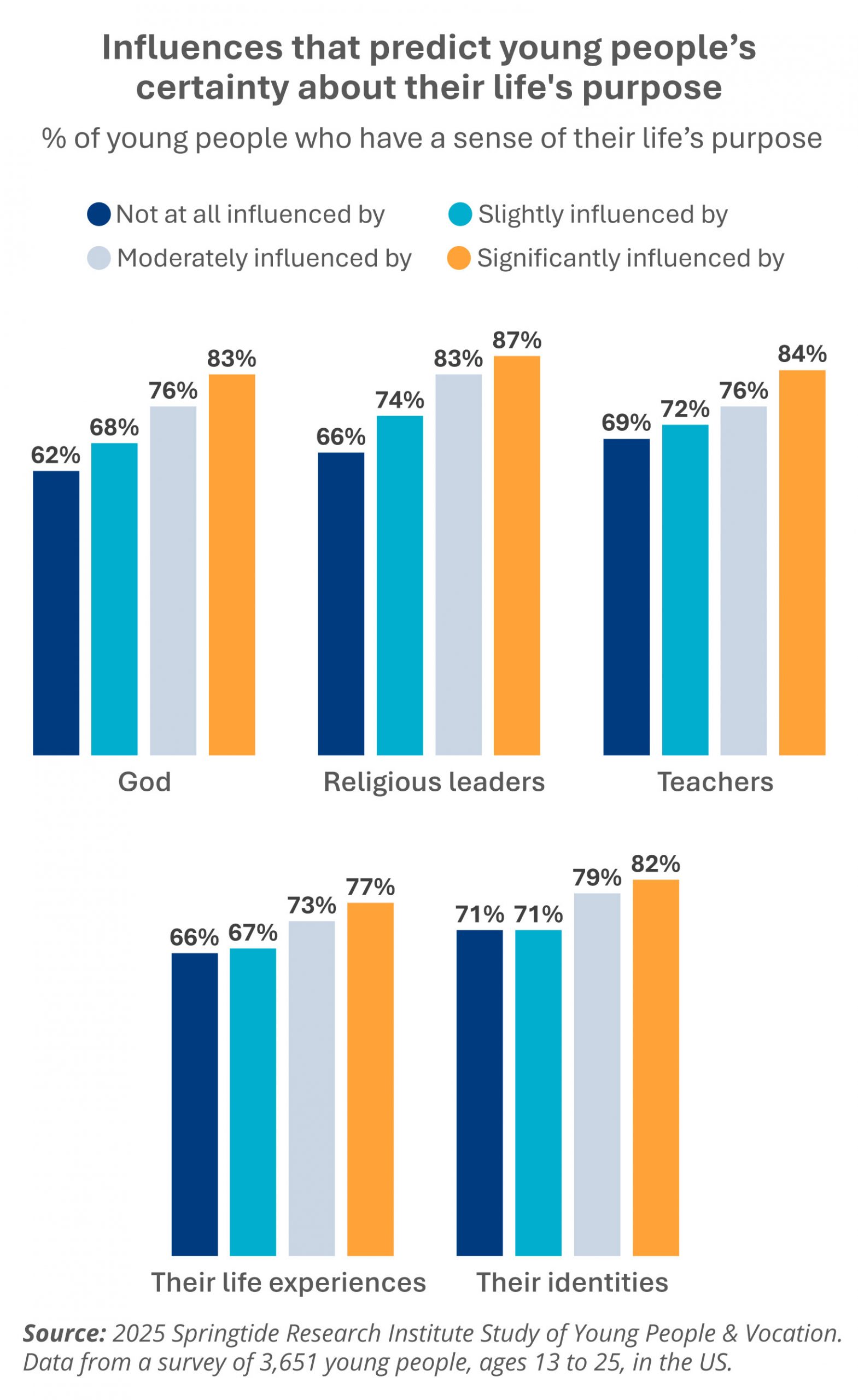
Young people are more likely to have a sense of their life’s purpose when they report stronger influence from God, religious leaders, teachers, life experiences, or their identities.
For example, among young people who report no influence from God, 62% have a sense of their life’s purpose. This percentage is higher among those with stronger influence from God: among those with significant influence from God, 83% have a sense of their life’s purpose. Similar patterns emerge among a few other influences: the stronger the influence from religious leaders, teachers, life experiences, or identities, the more likely young people are to have a sense of their life’s purpose. These influences may be especially effective in helping young people understand what they are meant to do in life.
Predicting Mental Health When Thinking About the Future
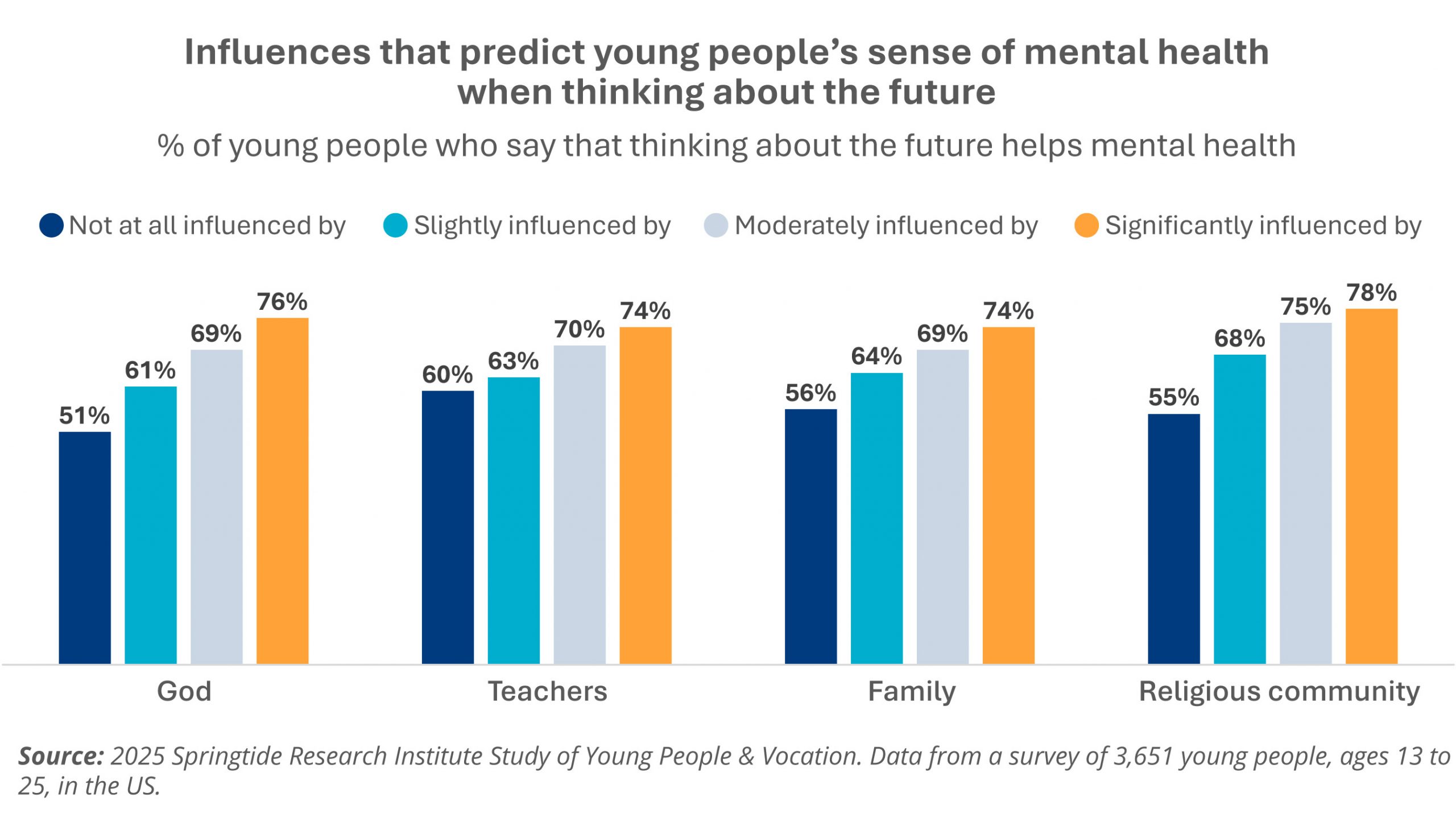
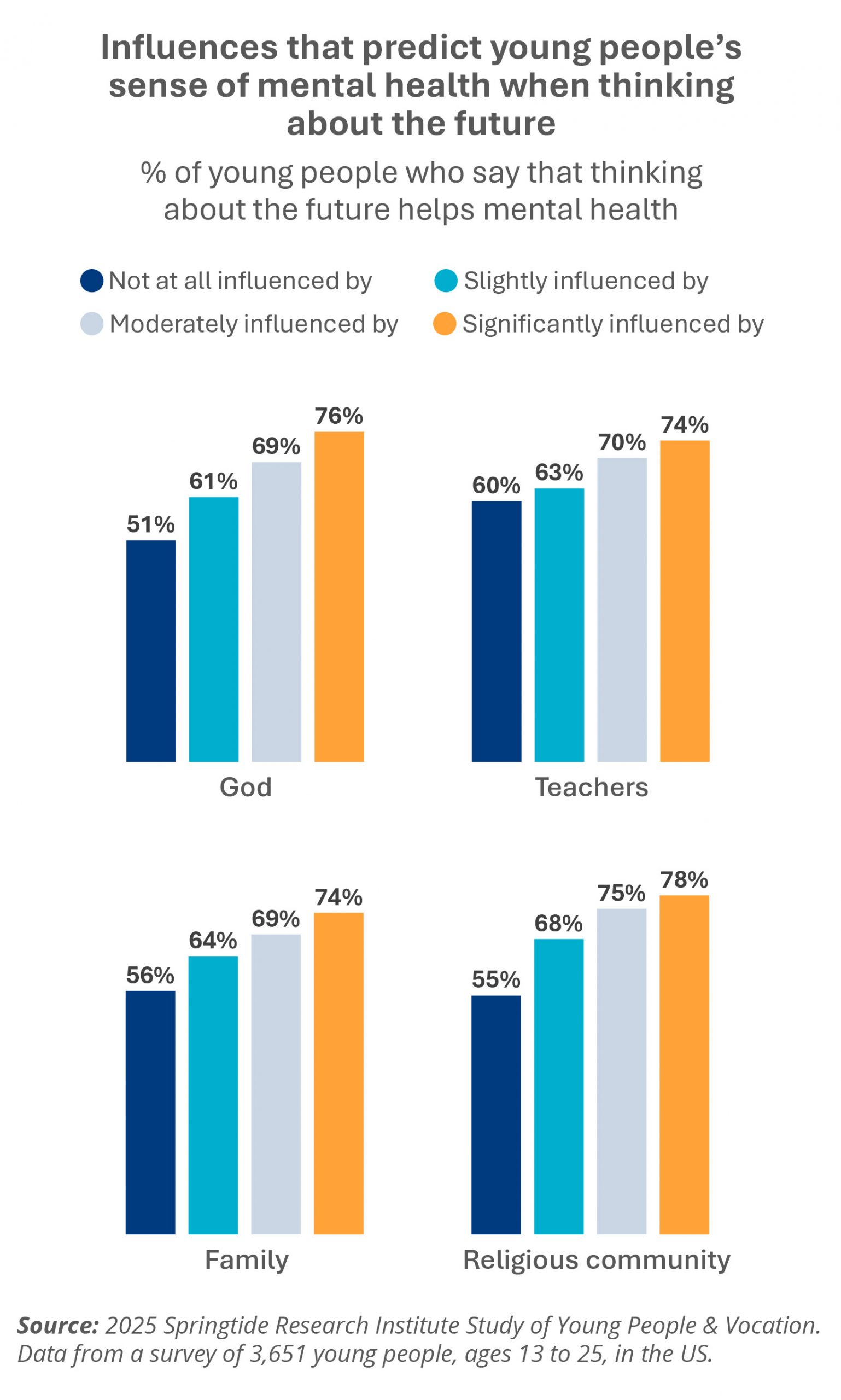
There are similar associations between strength of influence and perceived mental health when thinking about the future. Young people are more likely to say that thinking about the future helps their mental health, rather than hurts it, when they report stronger influence from God, teachers, family, or their religious community.
For example, among young people with no influence from teachers, 60% say that thinking about the future helps their mental health. Meanwhile, among those with significant influence from teachers, 74% say the same. Similarly, the stronger the influence of God, their family, or their religious communities on young people, the more likely young people are to say that thinking about the future helps their mental health, rather than hurting it. These influences may be particularly effective in helping young people navigate their expectations, uncertainties, or emotions around the future.
Conclusions
While a variety of people and things may influence teens and young adults as they figure out their futures, it is likely that these influences affect young people in different ways. Some influences may be especially effective in guiding or supporting young people as they navigate questions about their future endeavors and their life’s purpose.
Notably, our data reveal that God and teachers are the only influences to significantly predict both young people’s certainty about their life’s purpose and their positive feelings when thinking about the future. While these are not the most common influences reported by young people, they are still among those that predict young people’s thinking about the future.
While these data—correlational in nature—cannot conclude that these influences directly cause positive outcomes for young people, they reveal patterns that can help educators, faith leaders, and other trusted adults begin to explore different influences in shaping young people’s sense of vocation and well-being.
Note: See methodology, question wording, and survey responses in the study codebook here.
Download our report, Making Sense of Vocation: How Young People Today Define and Discern their Life’s Purpose.