

Research on young people’s vocation and sense of purpose
How teens and young adults define and discern their life’s purpose
The word “vocation” appears often in conversations about young people’s futures, yet people use the term in different ways. “Vocation” can be described as a calling from a higher power or as a broader sense of meaning and purpose in life.
In 2025, the Christian Brothers Conference commissioned Springtide Research Institute to survey over 3,500 young people and interview 35 more to examine how teens and young adults understand the direction of their lives, discover a sense of purpose, and see how, if at all, the word vocation resonates with them.
This research aims to support more informed conversations about vocation and the role trusted adults can play in accompanying young people as they reflect on their sense of purpose.
Key Findings
Most young people already have some sense of their life’s purpose.
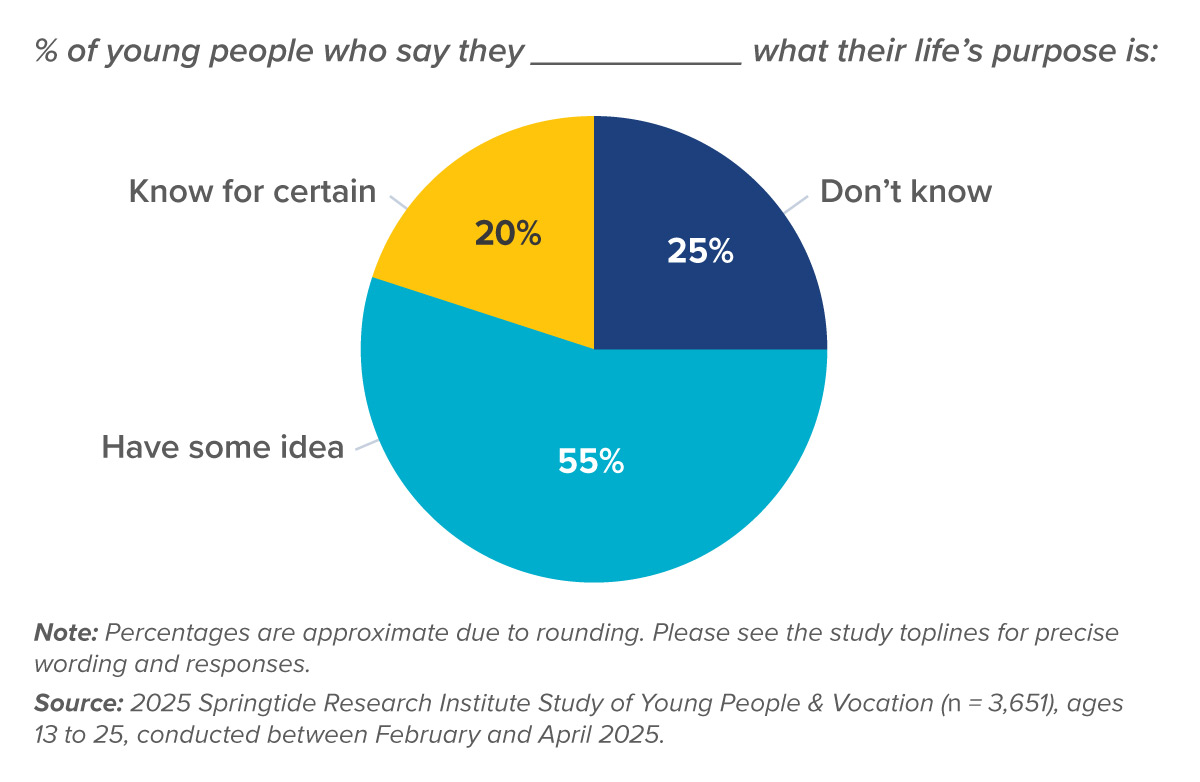
Three-quarters (75%) of young people say they have at least some idea of what their life’s purpose is, including 20% who say they are certain about their purpose in life.
Educators play a role in discerning life purpose
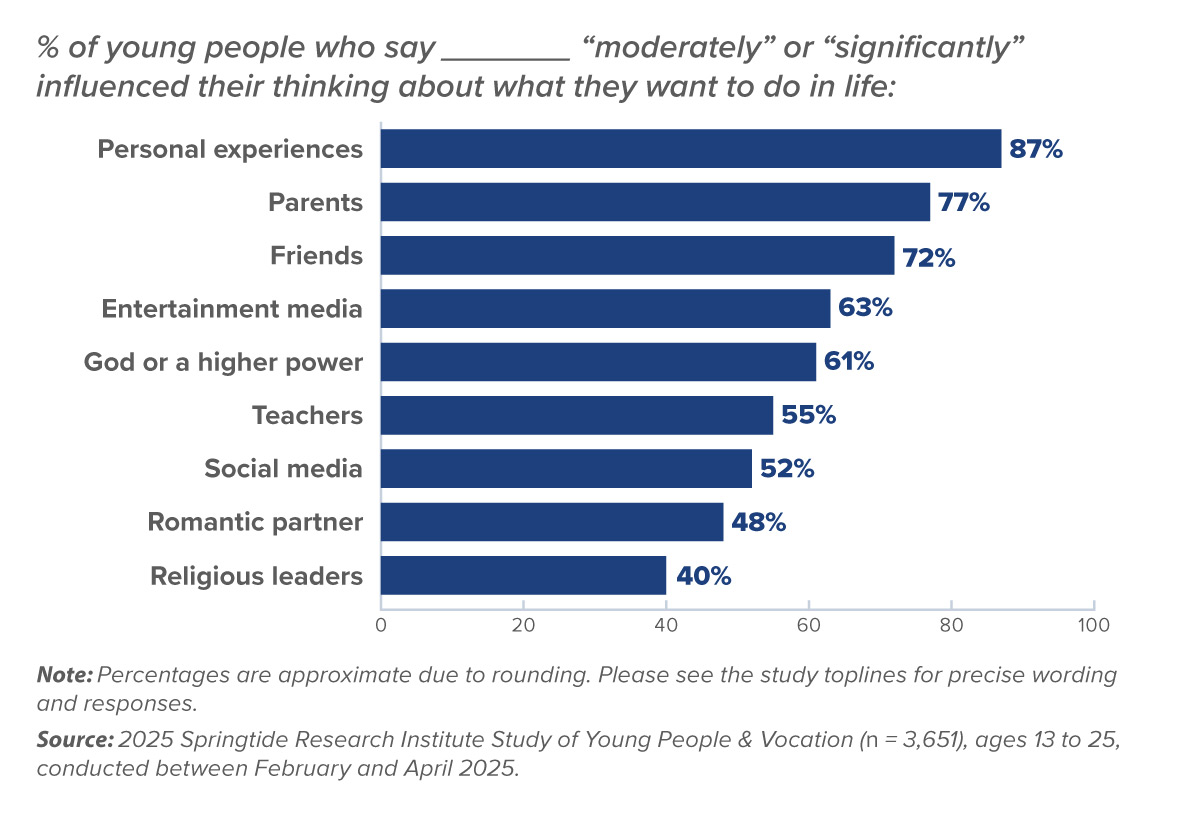
Parents and friends rank among the most influential voices in young people’s discernment. Teachers likewise play a meaningful role in helping young people think about their purpose and explore new possibilities.
Over half (55%) of respondents say that teachers have moderately or significantly influenced their thinking about the future.
Financial pressures can constrain vocational aspirations
Financial concerns figure prominently in young people’s discussions about the challenges they face in pursuing their vocation. In fact, it is the most common response young people mention when asked about their barriers to thinking about and planning for the future.
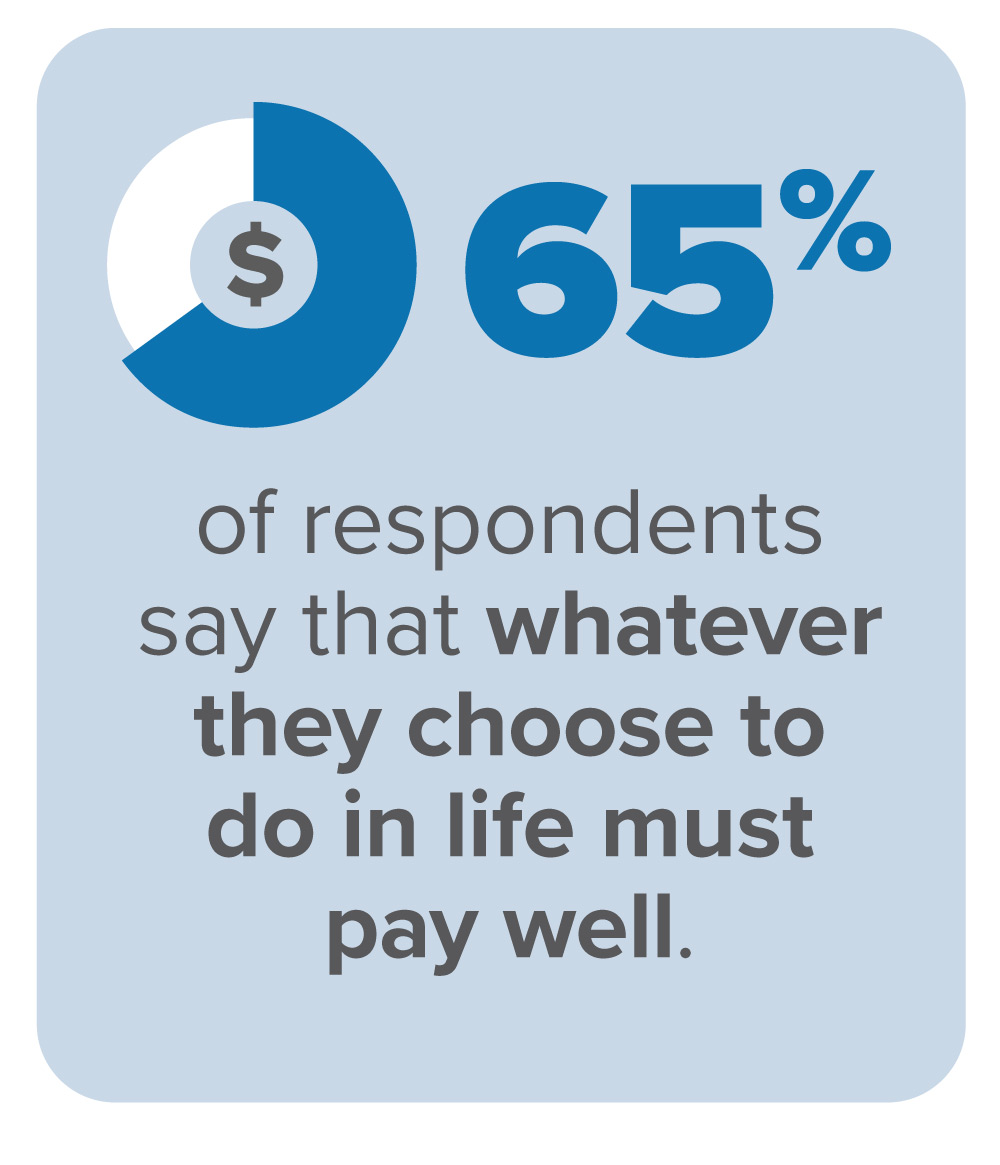
Respondents describe concerns about paying for college, finding stable employment, and earning enough income to support themselves and their families. Many young people see these as conditions that could prevent them from pursuing what they believe to be their true vocations.
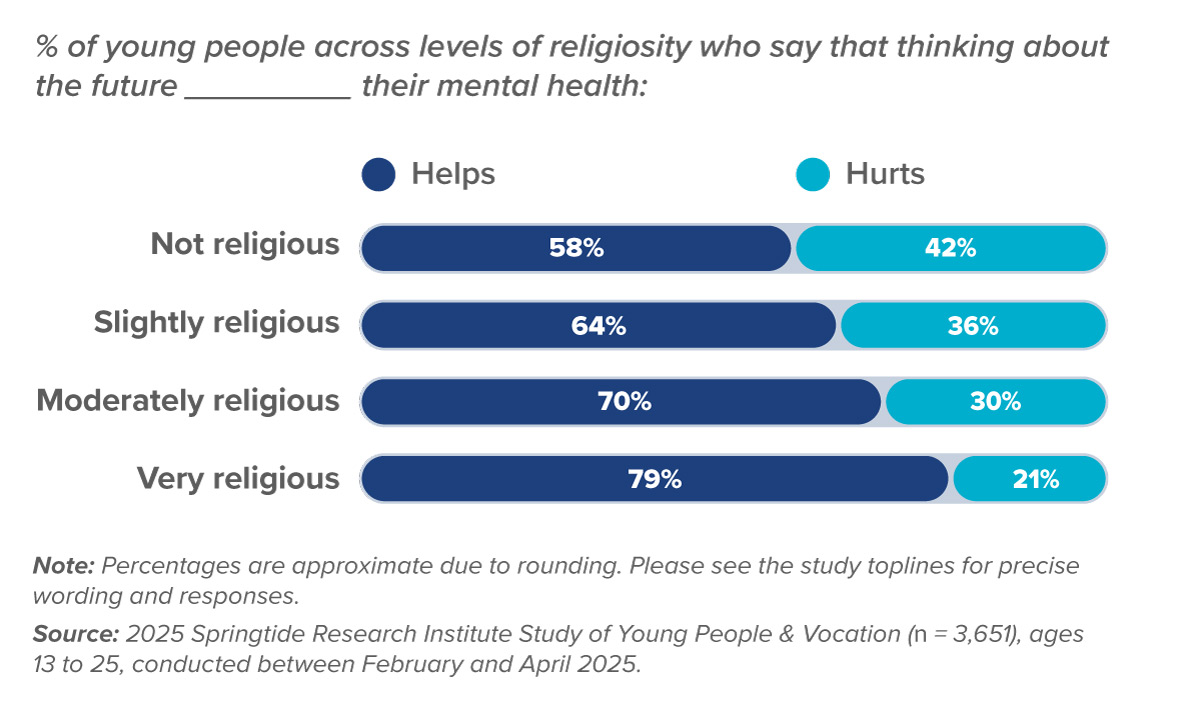
Religion can make thinking about the future feel more hopeful.
Religious young people are more likely than nonreligious young people to say that reflecting on their future supports their mental health.
By contrast, nonreligious young people are more likely to say that thinking about their future hurts their mental health.
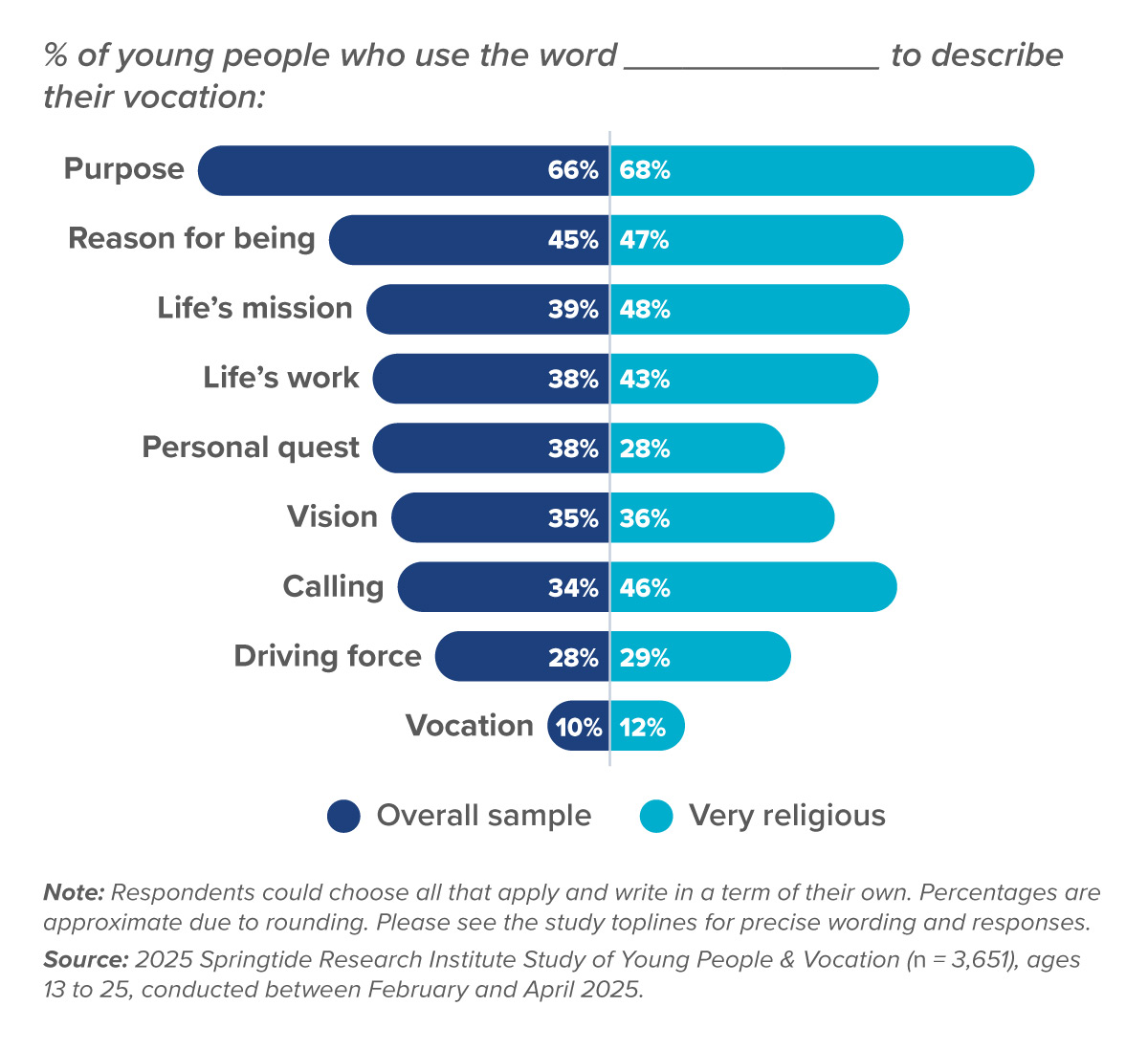
Young people rarely use the word “vocation.”
Over half have heard of the term “vocation,” but only 10% personally use it.
When asked which words or phrases they personally use to discuss vocation, “purpose” emerges as the most commonly selected term (66%), followed by “reason for being,” (45%) “life’s mission,” (39%) “personal quest,” (38%) “vision,” (35%) and “calling” (34%).
Download the full report for free by filling out the form at the top of this page.
Download the full report for free by filling out the form below.