


Research on youth involvement in extracurricular activities
Explore data on why extracurriculars matter for teens and young adults
Why do young people participate in extracurriculars? What are the benefits of involvement in extracurricular activities for teens and young adults? Why do some young people join some groups but not others?
As young people first encounter organized groups, their participation is still taking shape, making both engagement and disengagement meaningful windows into how social conditions support or inhibit voluntary engagement in their communities. At Springtide Research Institute, we wanted to deepen our understanding of how and why young people choose to engage in extracurricular activities.
We interviewed 51 young people, ages 13 to 25, about the groups, activities, and communities in their lives, focusing on those that they choose. Insights from these conversations formed the foundation of our survey on young people’s extracurricular involvement. Nearly 3,000 young people answered questions about the groups, clubs, and teams they join.
Our analyses provide insight to help educators, coaches, and other trusted adults better understand the dynamics and benefits of young people’s extracurricular involvement. Equipped with this understanding, adults can better support participation and help promote a more meaningful sense of involvement for young people.
Key Findings
Most young people are involved in extracurricular groups, such as a club or team.
Over three-quarters of young people, ages 13 to 25, report participation in at least one extracurricular-type group, including athletic teams, performing arts organizations, affinity clubs, or gaming communities. This involvement is typically connected to their schools.
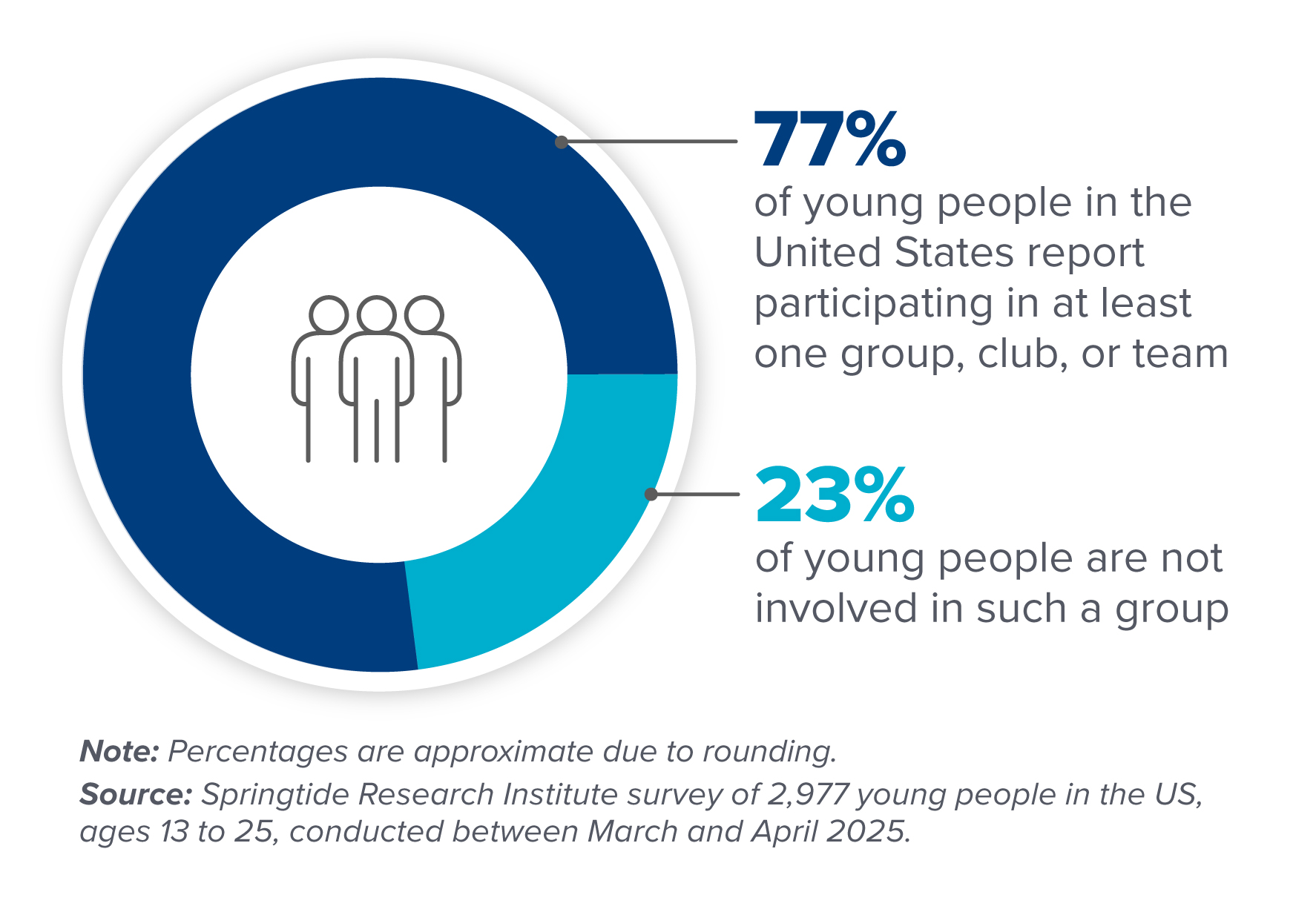
Nearly a quarter of young people are not involved in a group, club, or team.
A quarter of uninvolved teens and 14% of uninvolved young adults say that the only reason they are not involved is because they don’t want to be. The rest share other barriers to involvement.
Some teens say that they have difficulty finding or accessing groups. Some young adults are uninvolved because they are unable to find a group or are overwhelmed by the process of finding a group. Others say that they don’t have time to get involved, or that they are unable to attain transportation to or funding for their involvement.
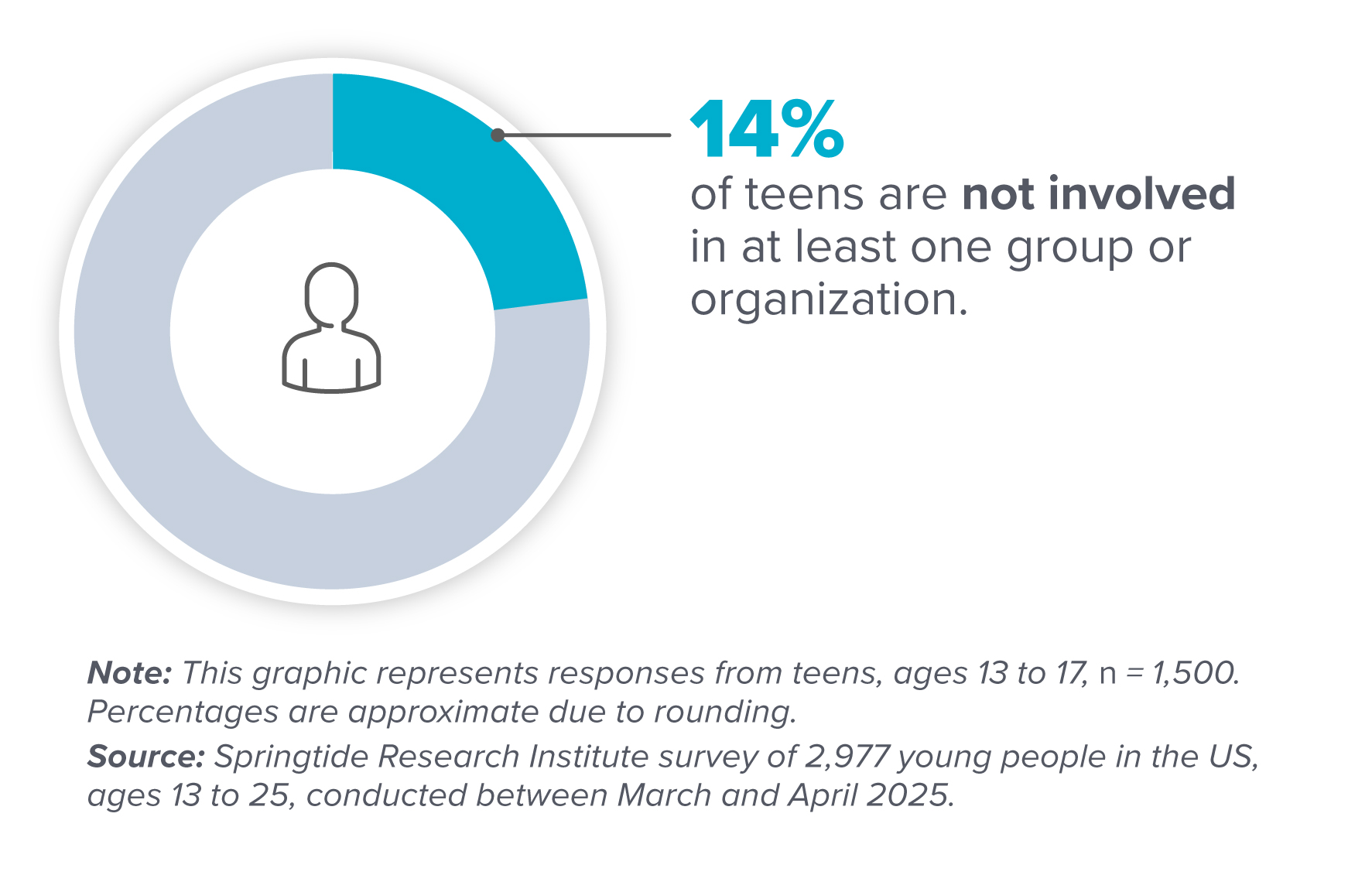
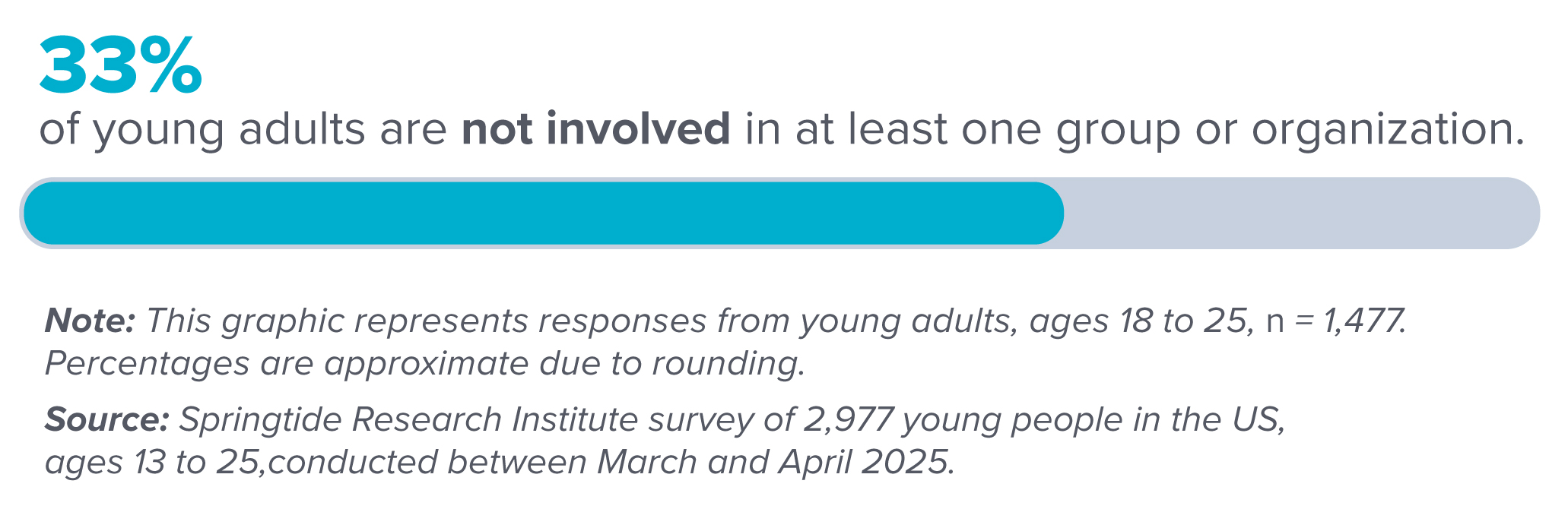
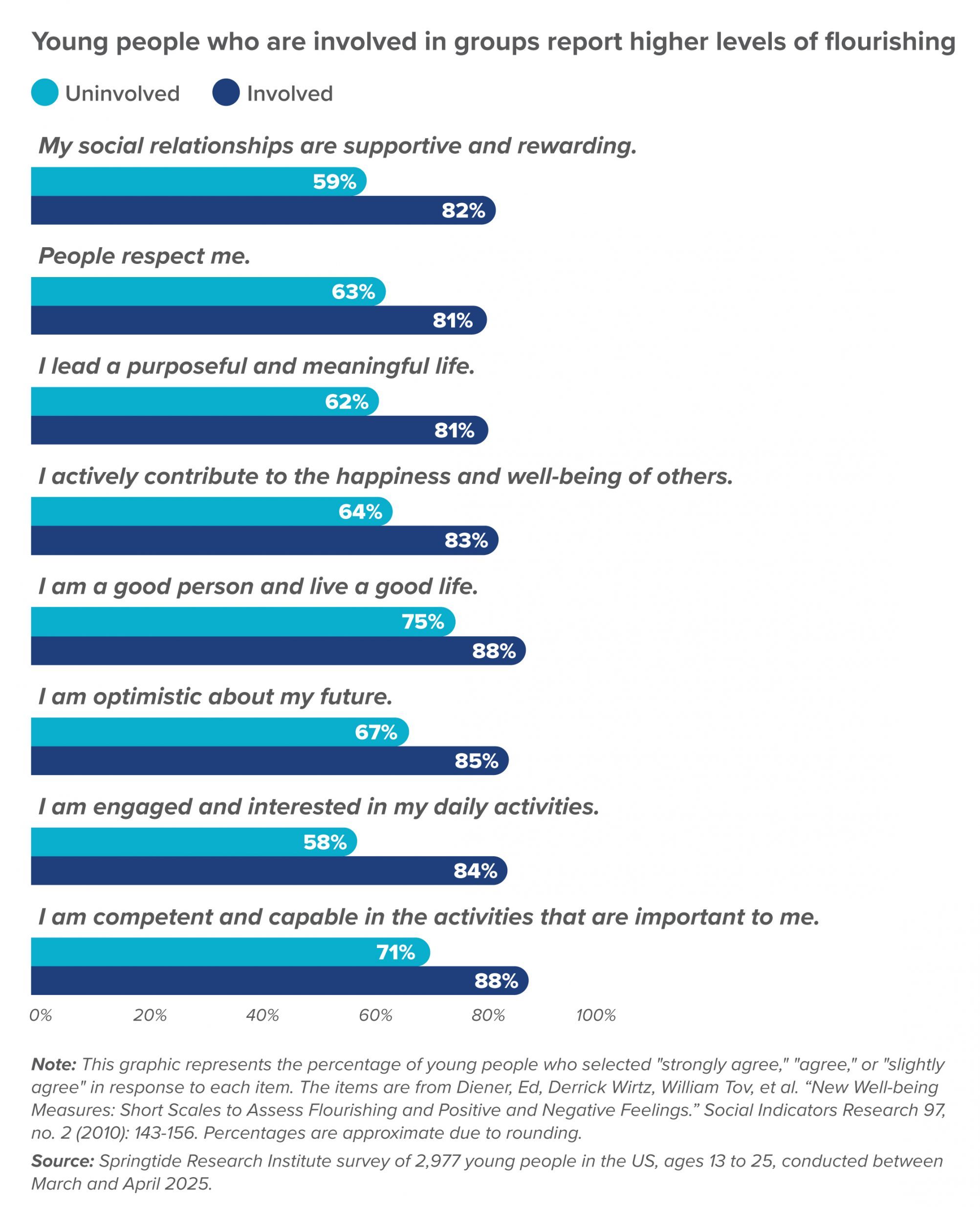
Participation in extracurricular activities is positively linked to young people’s well-being.
As compared to those who are uninvolved, young people between the ages of 13 and 25 who are involved in at least one group tend to have higher levels of flourishing and lower levels of loneliness, anxiety, and depression.
Despite challenges that some young people have—including difficulty fitting in, coping with high expectations, and maintaining balance—the positive associations between involvement and measures of well-being are robust.
Teens and young adults participate in different types of groups.
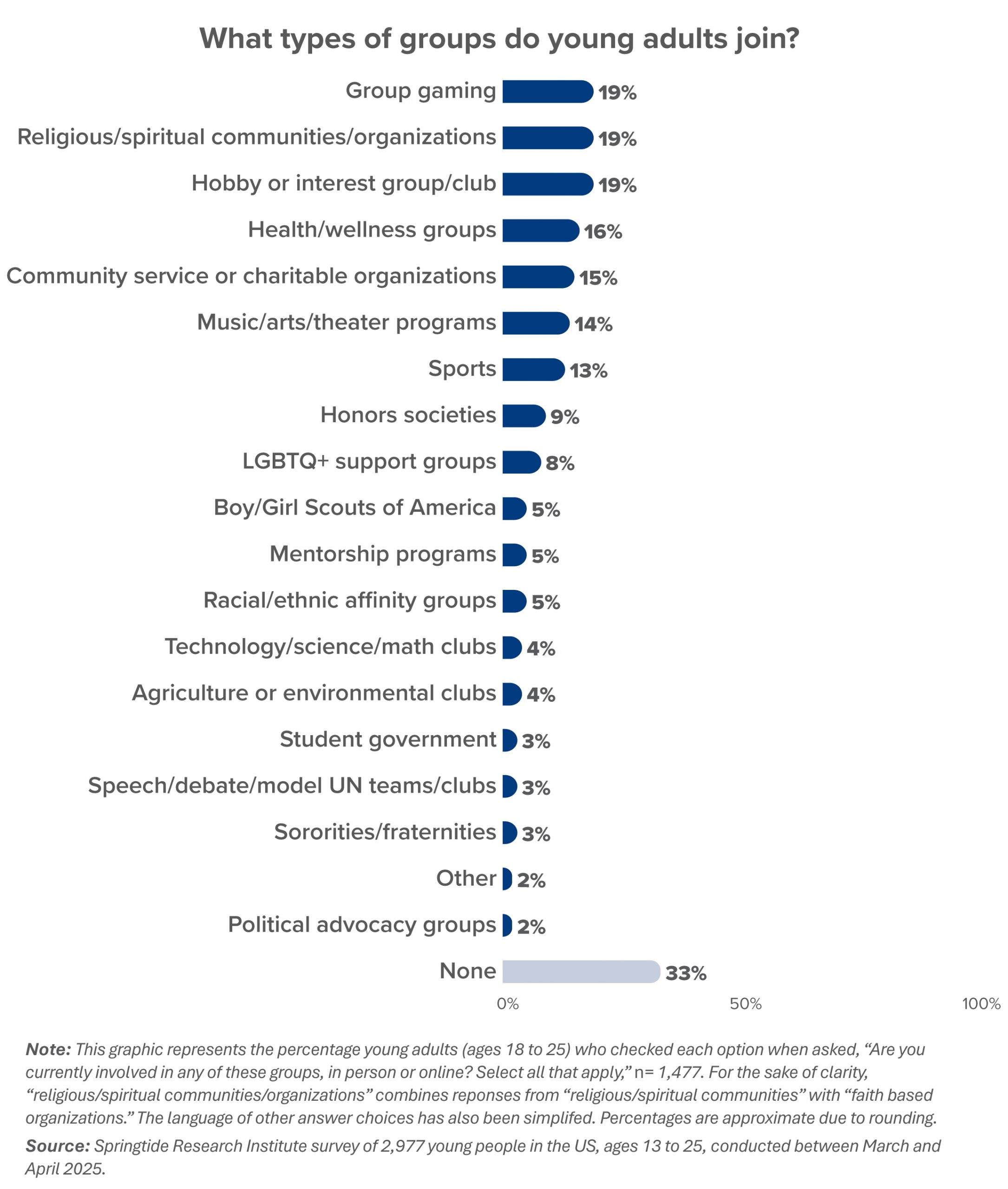
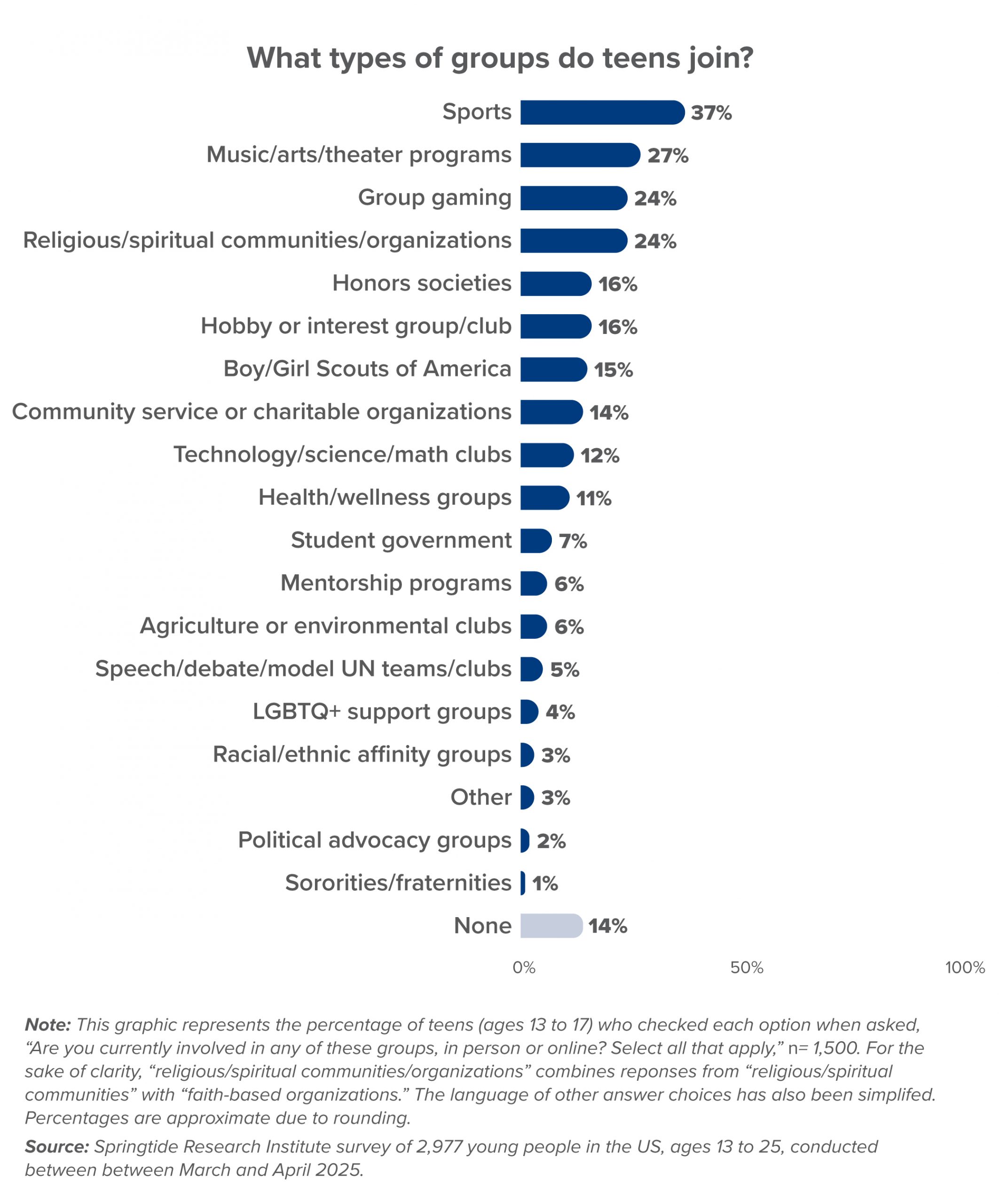
Teens are most often involved in extracurriculars related to sports, arts, gaming, and religion/spirituality. Young adults are most often involved in groups related to gaming, hobbies, and religion/spirituality.
Download the full report for free by filling out the form at the top of this page.
Download the full report for free by filling out the form below.